We speak with one of the five winning duos of Lied the Future 2026
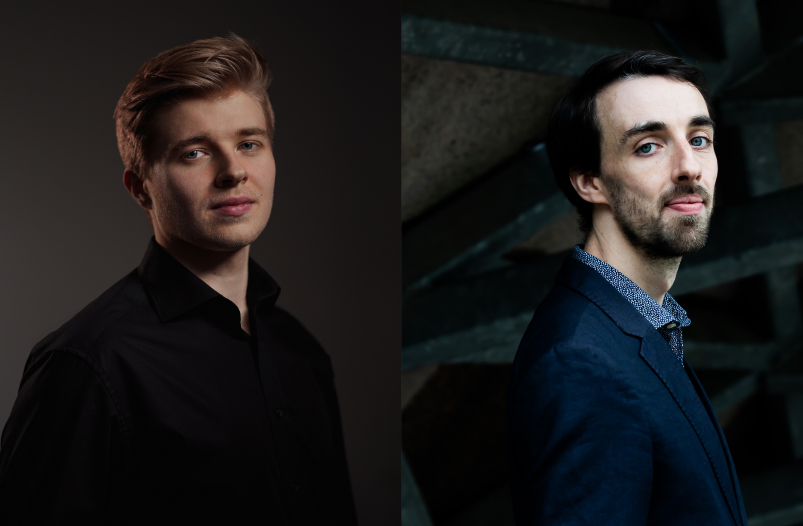
German baritone Bruno Meichsner and British pianist George Needham are one of the five duos selected for the 2026 edition of Lied the Future, the programme promoted by the Franz Schubert Association with the support of the Fundació Ferrer de Música. Both musicians, with strong backgrounds in lied and concert performance, have been recognised for their high artistic level and their musical rapport, which will lead them to perform at leading venues such as the Schubertiada on August 25.
Trained in Berlin, Oxford and other leading European institutions, the duo shares a deep sensitivity for the dialogue between music and text. Their participation in Lied the Future not only offers them top-level training with renowned mentors, but also the opportunity to establish themselves within the international lied circuit, representing a new generation of artists committed to this genre.
What led you to study lied, and what do you find most exciting about this musical genre?
Bruno Meichsner: When I was a child (10) my family used to do a lot of house music and one day my older brother had the Schubert Lieder Volume 1 and wanted to play it on the piano. I sang in a boys choir and he wanted to show me the music. The sensivity, to play with beautiful words and combine music and text together about being humans and there problems, desires and feelings is a very fulfilling work for me. As well the conversations and exchange of ideas and interpretations in rehearsals give me a lot.
George Needham: Singers! Early in my studies I made some wonderful friends who happen to be singers, and I wanted to make music with them. I then fell in love with poetry. I found the interplay of meaning between poetry and music endlessly thrilling and working with text has taught me so much about rhythm, articulation, the limitations of musical notation, the limitations of language, and the mysteries that lie beyond those limits.
When did you decide that vocal performance (or piano) would be your professional path?
BN: I still had some doubts when I started my education in Berlin. But I had the greatest teacher I could wish for. He encouraged me to believe in myself as a singer and a person when I didn’t. And during my bachelors I found the picture for myself that a singer is a storyteller. Somehow I feel more related to this definition.
GN: At around ten years old I knew I wanted to be a pianist, but didn’t having the slightest idea what that entails in reality. When as a teenager I expressed this wish to a teacher, he, knowing what the career entails, took me seriously enough to work me mercilessly hard.
What inspired you to apply for Lied the Future?
BN: I want to gain a lot of knowledge and experience in Lied. For me its extremely interesting and helpful to listen, learn from other people. This program is gonna be an intense and inspiring space to make experiences.
GN: I love working with Bruno. He and I had been on the lookout for projects. Lied the Future had been on my radar for a while. The standard of musicianship I‘ve seen emerge from the previous years‘ academies is astounding, and the mentors are some of the world’s leading proponents of Lied.
How did you feel when you were informed that you were one of the new scholarship recipients of Lied the Future?
BN: I was waiting in the waiting room for my doctor’s appointment when the confirmation came. Then I was the only one in the room with a big grin on my face.
GN: I did a little dance in my kitchen.
What does it mean to you to be part of this program promoted by the Fundació Ferrer de Música?
BN: It means a lot to me because the quality and level is very high and it’s a dream for every singer and pianist to get in a such a program. Not only for ourselves as musicians to gain more knowledge and experience. Further the more it´s extremely important to have programs and supporters for the music and art which keeps our society together. In an increasingly divided and chaotic world, it is important to counter this threat with music that always puts people and being a society first
GN: The breadth of the Fundació Ferrer de Música’s work is a truly inspiring reminder of music‘s power for good in our society. Often there‘s a tendency for us musicians to lock ourselves away in our practice rooms or concert halls and pretend that the realm of art is separate from the imperfect, messy, political world. Being part of this programme means harnessing music‘s transformative potential in the world.
What do you hope to learn from the teachers and mentors in this edition?
BN: I hope to learn not only technical skills from the teachers on the ‘The Future’ music program, but above all their personal experiences with musical pieces. I find their stories and anecdotes from their own musical careers particularly fascinating, because they show just how deeply they have engaged with certain works. Often, you also learn interesting background information about the composers or surprising details about a piece that you may never have heard before. It is precisely this combination of specialist knowledge and personal insights that makes learning particularly valuable for me.
GN: Each composer speaks a unique language. The protean ability to conjour entirely distinct sound-worlds and switch between them over the course of an evening is a quality I admire in many of my favourite concert artists, and which I hope to nurture under the guidance of this year’s mentors.
Which aspect of your artistic development would you most like to strengthen this year?
BN: A constant effort to deepen my confidence in my voice and in myself as an artist.
GN: AI is becoming increasingly integrated into our lives. In this context I’m increasingly compelled to ask: what are the uniquely human elements of live performance, and how can I delve more deeply into those? We are right to demand technical excellence and stylistic rigour and emotional authenticity from our performances. But in the moment of musical creation, I hunger for spontaneity, risk, danger, vulnerability. These are the spaces I want to explore.
What does it mean to you to have the opportunity to perform at leading festivals and venues?
BN: It’s like a dream becoming reality. During my studies I enjoyed and sing art songs the most and to share it with people at leading places like here is such a joy.
GN: Most importantly to me, it means the opportunity to share the music I love with more people. Giving the gift of Lied to others is a gift to me, and one for which I‘m grateful to Lied the Future.
How do you envision your career five years from now?
BN: In five years I want to sing Song recitals with a lot of Schubertiaden included. Until then I want to have my first CD published.
GN: What I know for sure is that I’ll continue to be challenged and inspired by the music that I love. That‘s already enough for a fulfilling life. As long as I‘m still sharing the music I love with collaborators that I admire and audiences who want to hear it, I‘ll continue to consider myself the luckiest person alive.
Do you believe initiatives like this are key to the future of lied? Why?
BN: Absolutely. Initiatives like this give song the attention it deserves and that we as people need. It reflects who we are, what defines us, and what we long for, helping us become aware of our feelings and the joy of being on this earth. Without initiatives like this, the world becomes a sadder place.
GN: Absolutely. In a climate of cutbacks and uncertainty around the future of the arts, it is imperative that we remain militant in our advocacy of Lied. Make no mistake: without such initiatives, young artists would struggle to find a platform, and to make Lied a part of their career. If young artists can‘t make Lied part of their performing careers, the future of Lied is at risk. A world with Lied is a more compassionate, empathetic and loving. That‘s a world I want to live in.
ARTICLES RELACIONATS